I cannot believe that it is over two weeks since my last update and comment! These public holidays which are accompanied by frenetic activities such as cooking, baking, wrapping gifts and spending time with family and friends tend to result in my getting all mixed up regarding the days of the week. Anyway, another Christmas Day has come and gone and a great time was had by all and now it’s time for a quick update!
As promised, I have inserted a photograph in the about page, and I have also created the contact page. Furthermore, the “Guest Contributor” section has been started with a hobbyist chef and his recipes. I am planning that, over the next few days, I will be starting to publish the first of several articles on local South African artists highlighting some of their work. This is all thanks to the kind co-operation of the Staedtler Company in South Africa and their extremely informative magazine, “MARS arts crafts and design”. More information will be given to you under the umbrella of “Artists”. Suffice to say that I hope you will find this section of great interest.
Since having to say goodbye to our dear Rudie, I have been in touch with the well respected breeder from whom we purchased him almost 13 years ago, and it seems very likely that soon we will be welcoming a new German Shepherd pup into our home. I will be giving you more info (for those of you who, like myself, are dog lovers) regular updates on this development.
Meantime, as we all recover from an overload of food, alcohol (if one does imbibe), people and end of year stress, I will just say that I truly hope that we can share a lot of thoughts, ideas and useful information in 2019.
Once again, that’s all for now and see you on the Magic Roundabout!
In a heavy based pan, fry the chopped bacon in a little olive oil until it is just starting to crisp and the bacon fat has all rendered out.
Remove with a slotted spoon leaving rendered bacon fat in the pan.
Add the onion and carrot and gently sautée stirring occasionally until starting to soften about 10 minutes.
Add the garlic and gently fry for about 1 minute
Add the diced potato, wine and enough stock to ensure the vegetables are totally covered by liquid.
Simmer for about 20 minutes or until the potatoes are starting to break up.
Stir everything vigorously to break up a lot of the potato – (you are looking for a slightly chunky potato soup type consistency). A potato masher also works well. It is ok if the carrot doesn’t break up as easily as the potato.
Add all the clam meat and most of the bacon leaving some for the final garnish
Add the cream and bring everything back to a simmer.
This is a really tasty way to serve chicken breasts which can often be quite dry, if not cooked correctly. It is great served with steamed rice and serves 4
Ingredients
4 Chicken breasts, halved and slightly flattened
1 large onion finely chopped
Olive oil
1 tablespoon butter
5 garlic cloves, crushed
250ml white wine
300ml cream
250ml chicken stock
1 handful of grated parmesan
2 handfuls chopped baby spinach
½ cup sundried tomatoes, sliced
1 Tablespoon mixed dried herbs
Salt and pepper
Method
Season the chicken with salt and pepper and then gently fry the chicken breast in a little olive oil until nicely browned and nearly cooked through. Remove from pan.
Gently fry the onion in the butter and 1 tablespoon of olive oil. When soft, add the crushed garlic and fry for about 1 minute taking care not to burn the garlic
Add the wine, and reduce to about half then add the mixed herbs
Add the chicken stock and reduce a bit
Add the cream and simmer for a few minutes until the cream has reduced slightly
Add spinach and sundried tomatoes and gently cook until the spinach has wilted
Add parmesan and stir through.
Taste and season as required
Add chicken breasts back to the pan and cook gently until they are cooked through
The aim of this section is to add interest and value to the “Magic Roundabout”, by having guest contributors with varying skills and/or interesting careers. I trust that you will find these refreshing and informative.
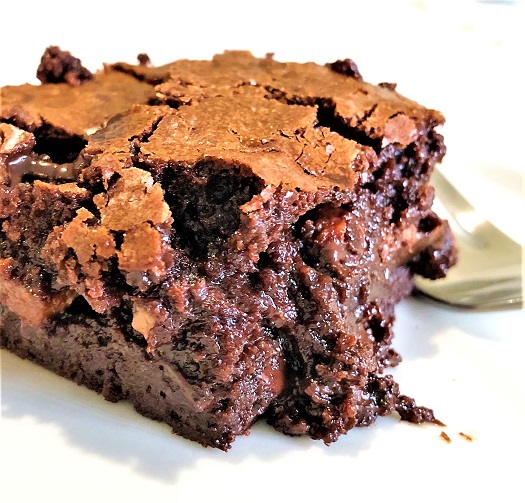
These are great on their own either served at room temp. or straight from the refrigerator. Or you can add a scoop of vanilla ice-cream for a slightly more decadent dessert.
Ingredients
115g unsalted butter
250g good-quality dark chocolate, chopped
90g good-quality milk chocolate (I use Lindt),
100g castor sugar
100g soft brown sugar
3 eggs
1/4 tsp baking powder
1 1/2 tbs Dutch or other good quality cocoa powder
1 1/2 tsp Vanilla extract
80g plain flour
Pinch of salt
Method
Preheat the oven to 170°C
Grease a 18cm x 27cm brownie pan with oil spray before lining the base and sides with baking paper.
Melt butter and 160g dark chocolate in a double boiler or in a heatproof plastic bowl in the microwave. Cool slightly.
In a separate bowl, combine the two sugars, the eggs and vanilla, and whisk by hand to combine. Add butter and chocolate mixture, then sift over dry ingredients and fold them through the mixture to gently combine.
Finely chop the milk chocolate and remaining 90g dark chocolate and add them to the brownie mixture.
Pour the mixture into the prepared pan and bake for approx. 25 minutes or until crusty on top and soft in the centre.
Leave to cool in the pan, then turn out onto a wire rack.
Once cool, cut into 4cm squares.
Store in an airtight container, such as Tupperware, in the fridge.
A great alternative to the classic French style mussels.
Ingredients
2 – 3kg live mussels, (or frozen if you cannot get fresh) cleaned
1 Chorizo, skin removed and finely diced
1 red pepper
1 yellow pepper
1 tin chopped tomatoes
3 cloves garlic finely chopped
3 – 4 Tablespoons good olive oil (not extra virgin)
2 challots finely diced
1 glass white wine (sauvignon blanc is best)
1 bunch fresh coriander
Salt/pepper if needed
*Fish Stock if needed (see bottom)
Method
Remove the skin from the peppers
How to peel peppers
1) Cut the peppers in half and remove the stalk, seeds and white membrane.
2) Place the peppers under a hot grill, skin side up, turning as the skin blackens.
3) Seal in a plastic bag and leave to cool.
4) Remove the peppers from the bag. The skin should now peel away easily
Chop the peppers into small cubes
Heat the oil in a large heavy based pot and gently fry the onion until soft
Add the Chorizo and gently fry until golden and slightly crispy
Add the garlic and fry for a minute or so taking care not to burn
Add the white wine and boil for a few seconds
add the tomatoes and peppers and bring up to the boil
Toss in the mussels, cover with a tight fitting lid and steam until they shells open (approx 4-5-minutes)
As soon as the shells have opened, remove from the heat and add a large handful of freshly chopped coriander
discard any mussels that have not opened.
Serve in bowls with crispy bread to soak up the juices
*Live mussels contain their own seawater which becomes its own stock when cooking. If you are using frozen mussels you can add some fish stock to increase the sauce volume in need.
My first contributor is “Nice! and Tasty – Chris”.
I have had the privilege of sampling Chris’s food in the past and it has always been exceptionally tasty and imaginative. Nice! and Tasty – Chris will be the main contributor in this section.
In his own words:
Originally from South Africa and now residing in Auckland, New Zealand, I have been cooking and experimenting with food for around 20 years. Being self-taught, I’m not constrained by any one style or cuisine, however over the years I’ve developed a real passion for creating desserts as well as slow cooking. My philosophy is straight forward really – look for and purchase the highest quality ingredients your wallet will allow. Don’t over-complicate food, and exercise discipline in cooking, realising that more often than not, fewer ingredients are better. Be mindful when cooking. I put as much concentration and feeling into frying an egg as I do when creating a complex dessert. Whilst presentation is important, ultimately it’s the depth of flavour and texture of food which determines a great dish.
Being rather technically challenged where IT is concerned (another shortcoming along with astronomy – planets, stars, galaxies etc., which are still a total enigma to me), I have a “behind the scenes” assistant who is presently still familiarising himself with WordPress. Therefore, I must admit that the blog is still “under construction”! I hope you will bear with me on this one!
I have lots of plans for keeping my blog one which should be interesting and, hopefully, appealing to many people who have varied interests and opinions. To prevent you from only hearing my voice, there will be a section for “Guest Contributors” and this will give an insight into the lives and passions of a variety of people from totally different backgrounds. I am not going to say too much about this section right now but you won’t have to wait too long for the first contribution.
Taking selfies is not something which appeals to me and I have never really enjoyed being photographed. I will, however, be replacing my unusual “About” photo once I find one which is more the real me – one which highlights just how much my looks have changed!
I realise that initially my posts tended to be too long, and the objective criticism I received in this regard has resulted in my splitting them into portions which should prove to be more easily digested. I do not want you to feel that you have to wade through my writing to get to the point.
Oh, by the way, I will also have a contact page on my blog in the not too distant future.
Well, that’s all for now and see you on the Magic Roundabout!
I do hope to be able to communicate my plans for my blog with you, the reader, using this section in the weeks and months to come. Sometimes I won’t be doing a full post, but will just jot down some thoughts and opinions right here which I trust will be meaningful and possibly thought provoking?
As an introduction to this latest article, I would just like to say that it is not meant as a political piece, although we cannot get away from politics these days, no matter where we live. I have realised recently that there are many people, both young and old, who are totally oblivious to the facts which I have written about here. I hope this essay may prove to be of interest to some of you although it will possibly evoke certain reactions from various quarters.
Part 1 of 5
As a fourteen year old arriving in South Africa in the early 1960’s as part of an English immigrant family, things were anything but easy. The immigration authorities did their best to make us adapt and feel welcome, but the comparison between life in the U.K. with all its first world amenities and benefits, and the rather backward situation in South Africa at the time took a lot of getting used to.
January, 1964 was one of the worst winters that England, and particularly the South of the country, had seen for many years. We virtually had to dig our way out of our front door due to the snowdrifts that had accumulated during that last freezing night in order to make our way by train to Southampton and the docks. The ship, the Cape Town Castle, left for the two-week journey to South Africa in the late afternoon of Thursday, 23 January to a festive send-off scene of hooters blowing, family and friends waving from the dock side, and much excitement being felt by those heading for new adventures.
14 Days on board the ship were days never to be forgotten. That first Sunday, when the weather was becoming much warmer, and the seas calmer, we arrived at the capital of Madeira, Funchal. Dozens of small boats suddenly surrounded our liner with locals trying to sell a variety of handmade wares to the passengers. These must have been hoisted up onto the deck of our ship in some kind of makeshift basket. The vendors were also happy to dive into the sea for coins which were being thrown to them by fellow passengers.
Those of us who wanted to explore the mainland, were ferried over to a world quite apart from anything we had experienced before. Child beggars were everywhere and following us as we started our sightseeing trip on foot around the town. The guide who was in charge of our little party shooed them away and told us to ignore them. We had never seen beggars before and neither had we seen massive bluebottles (giant flies) clustering all over the sugary cakes which were displayed in the grubby windows of a shop which was closed, due to it being Sunday!
We were taken down into a cellar where we were treated to a sherry sampling experience – even I was given a taste (no under 18 limit on alcohol consumption obviously!) Madeira was, and possibly still is, well known for its handmade embroidered articles such as tablecloths, handkerchiefs (do you still remember what they were?) and small mementoes were purchased to remind us of our short visit to the island.
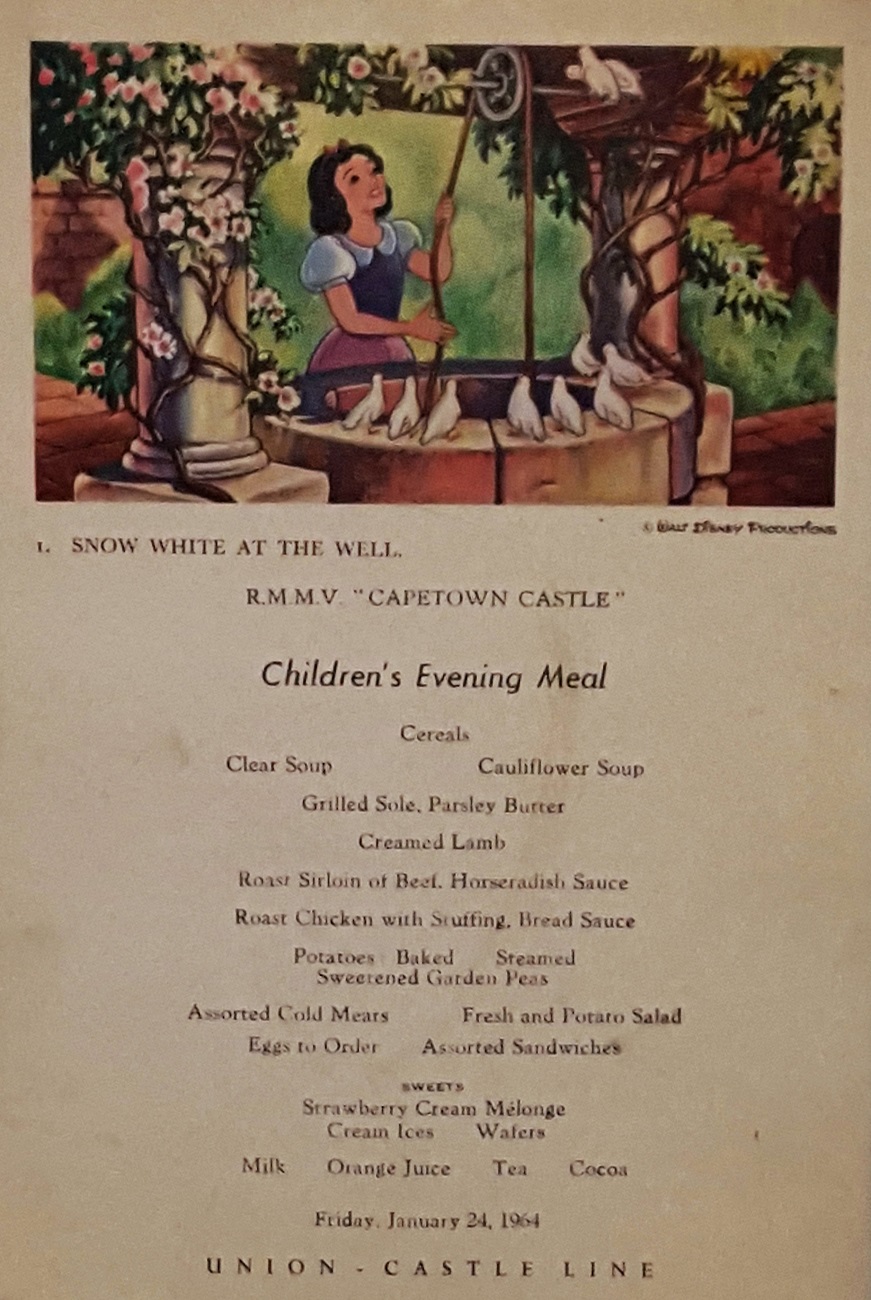
The rest of the trip consisted of games on deck, swimming in the large pool, a crossing the line ceremony where King Neptune, covered in seaweed and carrying his trident came over the side of the ship to the delight of all and sundry! We received crossing the line certificates to commemorate reaching the equator. There were amazing meals on board, and the smaller children had their own dining room, and a choice of food to whet even the faddiest eater’s appetite. We had competitions, dance nights for the adults and it was an amazing way to travel to a new life. Our family had two cabins, and I and two of my siblings had an outside one with a porthole. The joy of watching flying fish when gazing out of this small window was so very far from anything we had experienced before. We had our own steward who actually catered to our every need whilst we were on board – and the cost of the entire trip was fully covered by the South African Immigration authorities who so badly needed qualified artisans from Europe to boost the work force. The attachments to this article may give readers some idea of just what a trip on a Union Castle ship was like and there may be someone out there who can relate to my memories with memories of their own.
Ship’s Menu Second Evening
Back of Ship’s Menu Second Evening
Menu Cover
Ship’s Log
“Click on one of the icons above to enlarge to a legible format.”
Part 2 of 5
Cape Town
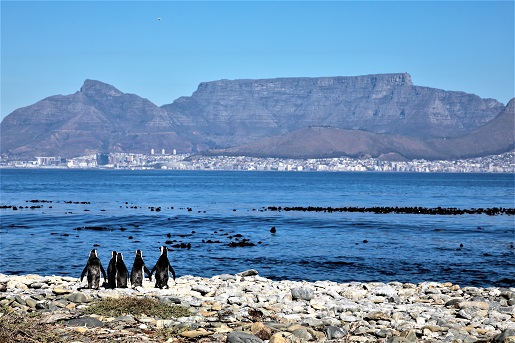
We arrived at Cape Town harbour early in the morning of 6 February and what a sight it was. An early morning sunrise with the promise of a very warm day, and in front of us that awe inspiring view of Table Mountain. After finally disembarking from the ship, which had to first of all be cleared by health inspectors, we were met by an immigration official who informed us that there was no work for my father in Cape Town, and that we had to travel by train to Pretoria in order for him to start job hunting. It was early February, and a lovely warm Cape day, which was spent waiting hours for our few belongings to come up from below deck, and then hours at the station waiting to board the train in the evening. There were five of us children and my young siblings ranged from 6 years to just 4 months of age. Looking back, my parents were facing a huge task as far as relocating to a continent so very different from the one we had left behind. Emigration these days seems to be far less traumatic in many ways, and communication via cellphones and the internet have made it so much easier to keep in touch with friends and relatives thousands of kilometres away. Not so in 1964!
Before getting on to the “milk train” on that Thursday evening, we were given vouchers to have an evening meal at a very upmarket silver service station restaurant – Kingklip was tasted for the first time. The little ones must have been exhausted by now, as well as my parents. No doubt the challenges of the day helped us all sleep relatively well in our small overnight compartment on the train. I just remember the bunks, and the small hand basin under the carriage window which was disguised by a wooden counter top cover. My mother had some kind of a flashback and knew immediately what lay beneath that cover! She always said that she had never seen anything like that before, yet knew instinctively what it was! Cell memory perhaps?
My mother had her hands full looking after all the little people, especially the baby who had developed a very bad cold and was fretting due to the hot and dusty air which was blowing in from the open windows. Travelling through the Karoo (a semi-desert area of South Africa), and stopping at every tiny station along the way was a rather daunting introduction to our new life. Hardly an adventure one would recommend to the faint hearted. At every small town at which the train stopped there were small ragged and barefoot children with their hands out hoping for coins to be thrown from the train. A new experience for us! The water pipe in the passageway of the train yielded extremely warm water- not very refreshing at all. (Bottled mineral water was years away from being available!) We had very few belongings with us but, in retrospect, that compartment must have been pretty jam packed with all 7 of us and our few belongings. I do remember though that all our meals were taken in the dining car and, despite this being a slow train and not exactly the Blue Train (!) (a famous, luxurious South African train), nevertheless we experienced top class service yet again. Obviously we had been given full board along with our tickets to Pretoria.
Thinking back, we experienced far more by opting to come to South Africa by ship, than if we had done what many other immigrants did, and come by plane. We had left a frozen Southampton on 23 January, and arrived in Cape Town on Thursday, 6 February. Two weeks of onboard entertainment, delicious meals and a day spent exploring Funchal (the capital of Madeira) – at least it gave us time to adjust to warmer weather!
In those days flying was not the comfortable mode of travel that it has become today. Planes were much smaller than Jumbo jets, and a flight from Europe to South Africa necessitated a stopover at some or other dodge African country. Those immigrants who opted to use the speedier choice of transport automatically arrived in Johannesburg where they were given temporary accommodation at an immigrant hotel in the suburb of Braamfontein. From there the fathers sought employment in the surrounding suburbs.
Part 3 of 5
Pretoria
In our case, we arrived at midday on Saturday at Pretoria station. We were once again met by an immigration official and taken to the Arcadia Hotel. My memory is of a colonial style building with the traditional red coloured concrete stoep (veranda) surrounding it and an African man wearing navy blue shorts and jacket and no shoes, polishing it. We stayed in this hotel (full board again) for the 3 weeks that it took for my father to find suitable work. During this time we did a bit of exploring on foot and tried to acclimatise ourselves to a very strange environment. The café scenario was something quite alien to us. We didn’t have anything like that line of business back in England. The South African local café was typically run by Greeks and, until recently, a carbon copy could be found on almost every corner of every town in this country. Newspapers and magazines, viennas and chips, cold drinks, sweets as well as cigarettes – all of these were being sold there and, as was the case of the café in Arcadia, there were a few tables and chairs for customers at which they could sit and eat or read the newspaper.
We found that the OK Bazaars was a household name here and you could buy just about anything from food, utensils, hardware items to clothing. In some ways it was similar to Woolworths in England – no connection to the Woolworths which we now have in South Africa. Whilst staying at the hotel we met some interesting people, including a blonde husband and wife who were stunt artists. We experienced a lot of kindness and were given some start up household gifts by one of the guests, and she gave me a small silver and blue Saint Christopher necklace. I didn’t know how light fingered many cleaning staff in South Africa tended to be so thought nothing of leaving my new necklace on my dressing table in my hotel room. It was stolen! When I realised what had happened, it was reported to the hotel manager, and it was found in the cleaner’s possession and I got it back. Lesson learnt! Do not leave valuables lying around!
Whilst in Pretoria we experienced such strange food items as maltabella porridge and the most enormous slices of tomato we had ever come across! We were taken to Pretoria Zoo on one occasion, and did a great deal of walking around the CBD. I can’t remember too much about how we spent each day at the hotel, but my mother must have been longing to be able to put down roots and start having a normal lifestyle once again. Without a pram for my youngest brother, it must have been very difficult doing any walking around outside the confines of the hotel. It is only now that I fully appreciate how tough it must have been for both parents making the adjustment to life in South Africa with so many children to look after.
Finally my father found a suitable job with a company house, but it was in Sasolburg in the province then called the Orange Free State. We travelled there by train and were met by a Mrs Marais, the local social worker for Sasol factory. We were taken to the recreation hall and given lunch – baked beans and ghastly tinned viennas! We had never tasted that kind of tinned sausage before and it has never managed to become a favourite of mine either! After lunch it was time to go to our new home – a brand new small house with a tin roof, situated on a large piece of ground and surrounded by a wire fence and gate. When we arrived there was an African woman sitting on the step outside the kitchen door. She had a pot nearby in which she was boiling green mealies. I was so homesick for England by this time that the smell of those mealies has been a total culinary turn off ever since. Sweet corn – yes. Mealies – a definite no!
We were told that the African woman would stay in an outside room on our property and would be our domestic worker – referred to derogatively in those days as “the girl”. We were given the rules by the social worker. The “girl” was not allowed to drink from our cups, or eat off our plates, or sit on our chairs. She had to have a tin mug, tin plate and eat outside. We were warned not to become too friendly with this woman as it could result in the family being sent back to England. Apparently there had been a case where an English woman had been found playing cards with her maid, and she was deported! It may have been an urban legend, but it is a story that has remained with me until today. Very different attitude to anything we had experienced before. We were also told about the 9pm curfew which meant that a siren would go off, and all Black people had to be off the streets! White by night was the rule of thumb! Back in England, my best friend at primary school had been a Black girl, and colour had been of no consequence in our family. Our next door neighbours there had coloured relatives and everyone just co-existed with no issues whatsoever. Admittedly, things are not quite that uncomplicated in the current UK.
Part 4 of 5
We had brought virtually nothing with us from the UK other than our few clothes, my mother’s sewing machine and……of all things, a fur coat which someone had given my mother back in England! A fur coat for life in Africa!! Mind you, she did wear it a few times as it could get very cold in the Free State in winter. In fact it actually snowed on 19 June, 1964 – my mother’s birthday as well!
We had prison style metal beds with coir mattresses to start us off and no doubt some curtains were loaned to us as well. Once my father started work at the factory, he found out that he could buy some furniture on hire purchase. The first item he bought was a piano! Something he had dreamed of owning all his life. Back in England he had been part of a jazz band and played a piano accordion, but that had been sold before we left. Now, he could entertain us with his musical prowess. My poor mother used to be trying desperately to get all the four young children ready to go out somewhere and had to contend with my father tickling the ivories! She must have had the patience of Job!!
We had Afrikaans neighbours on both sides of our house in Sasolburg, as well as all the way down our street. The people to the left of us were the true salt of the earth Afrikaners. They came over to meet us and brought a platter of koeksusters and another plate with some rather strange looking dried, dark coloured food on it – our introduction to biltong! These people were very unsophisticated and when my dad discussed the population of England with the neighbour he could not believe that so many million people could live on an island 20 miles long and 1 mile wide!! Obviously no European geography was taught at his old school! However, despite the educational disparity, these neighbours were amazing and very hospitable. The wife taught my mother how to make her own bread, and also helped us to assimilate somewhat into this new world in which we found ourselves.
The streets in our neighbourhood had not yet been tarred, and our road was the last road in that part of Sasolburg. Where the houses ended, there was open land and some hills. Going for a walk in the veld one day I came across the skull of a dead sheep. This was enough to make me feel as though I had died and gone to hell! This was so very different to the life we had left behind. We had no television, and my small transistor radio struggled to find anything relating to radio Luxemburg! Eventually, LM Radio would fit the bill, but not in those early days!
We soon made friends with another immigrant family who lived several streets away from us and who also had a lot of children. They helped us by giving us the necessary information regarding the schools we had to enrol at and what to expect. I was soon enrolled at the dual medium high school and that in itself was traumatic, as in England I had attended a girls only grammar school. This co-ed situation was a real shock to the system. I found the boys so ridiculously childish, and the girls totally two-faced. In England what you said, and what you did, were one and the same thing. Not so in South Africa!
I made a few friends, but was extremely homesick for my old life. Reading through my diaries from those days, I realise now just how unhappy I must have been. Receiving letters from old school friends telling about the pop groups they had been able to see at a local venue emphasised just how big a gap there was in those days between life in England and here in S.A. and initially upon our arrival here, no-one knew anything about the Beatles! That was probably one of the hardest aspects of making new friends – they knew nothing about the British pop scene at the time and the absolute hysteria caused just by mentioning the Fab Four! For a teenager, uprooted from England, this was one of the worst realisations, as I had had pictures of Paul McCartney stuck on the inside of my desk lid at school in England! Talk about suffering from serious withdrawal symptoms!
Part 5 of 5
My first day at my new school included a subject called Religious Instruction and the lesson was given by the local Methodist minister. He seemed very kind and concerned, and asked if he could come and visit us. He duly did so and lent my mother various cooking utensils as well as some furniture. I remember that he also brought along a pressure cooker which she was too nervous to use! Sadly in years to come this same man was rumoured to be a paedophile who molested young boys. He had really been such a help as far as our family was concerned.
My school was predominantly Afrikaans, with one English class per grade. In certain cases we had to share a teacher for a particular subject, so bookkeeping was half in English and half in Afrikaans. The fact that I had already missed several months of the subject did not bode well for my end of year exam! There was a nasty English speaking science teacher who shall remain anonymous, who used to twist short strands of your hair at the back of your head if you failed to answer a question correctly. What an absolute piece of work he was! On the other hand there was a lovely arithmetic teacher who used to say: Let’s play arithmetic, children. He was an Afrikaans man who, not long after I had started at the school, died of a heart attack on the school tennis courts. Very sad indeed and I will never forget him.
Having to learn Afrikaans in standard 7 was a bit tough, to say the least. I had been put back a year at school, purely due to my lack of knowledge of the Afrikaans language. It proved to be a blessing in disguise in the long run, as several of my school mates and I started standard 8 at a commercial high school in the neighbouring town of Vereeniging. It was a fairly long school bus journey each day, but it meant that we started all our subjects, including bookkeeping, from the beginning. Thus I was able to come to grips with it and excel. This was the school from which I matriculated as top student 3 years later.
At the new school there was another dreadful human being calling herself a teacher who became my personal nightmare. She was fanatical about giving extra gymnastic coaching to the talented girls (not me!), and was also in charge of the prefect group. Due to my hard work and perseverance, I was made a prefect. However, this woman made my life hell. She was still living in the days of the Boer war if her attitude towards me was anything to go by. She was hard, cold and out to make my school days a living hell. One of my duties as a prefect was to ensure that all the girls were wearing regulation (granny style) school underwear (you were expected to check!) and also that the gymslip hem was not overly short, and the regulation white ankle socks were folded down properly! That was how the mid-morning break was supposed to be spent! Just a few weeks of this garbage and my parents had a meeting with the principal of the school and aired my grievances – I gave back the wretched prefect badge and concentrated on being the best student in the school! My happiest school day was the day on which I wrote my last matric exam paper!
On a totally different note, it was a shock to the system for anyone coming to this country from overseas and realising that it was a crime to use an entrance which was designated to a particular race group. At the post office, there were two entrances, one for Whites and the other for non-Whites. Park benches were marked accordingly and you made sure you used the correct one. I believe that in the Cape and possibly Natal too, buses were not as segregated, but they most certainly were in the OFS (Orange Free State – no oranges, nothing free and in a heck of a state) – something which had never been of any consequence before we came here.
I know that it was against the law for Black, Coloured and Indian people to move freely from area to area in this country in those days, and Black people could be arrested and jailed for not carrying their passbook with them, if confronted by a police officer. Must have been terrifying for many people as the police were nothing like the local English Bobby! In England you were taught that if you were in trouble of any kind, you needed to find a policeman and he would help you. Not quite the order of the day in the 1960’s South Africa. Not even for those of us with a white skin! There was an unnerving similarity between the traffic police riding motorbikes and wearing khaki and long leather boots and pictures of the Nazis of the Second World War.
The law was decidedly biased in those days. Crimes were viewed differently according to the race of the perpetrator. Violent crimes committed by Black people often resulted in the death penalty, whereas it was possible that a White criminal would have received a far less harsh punishment. Fortunately for us all, things have changed radically in South Africa and, although racism still exists in many areas, one is free to mix and marry across the board. Colour and culture of one’s preferred friends or partners is a personal choice nowadays. Years ago if one wanted to marry a person from a different cultural group based on colour, the only option was to leave the country. You were restricted to just how friendly you were allowed to be with others. If a White woman was found to be driving a car and a Black man was sitting in the passenger seat, she ran the risk of being arrested and charged under the Immorality Act. The same applied to a White man with an African woman in the passenger seat.
Many years after our arrival in this country, whilst the Apartheid regime still ruled supreme, Black people were not allowed to use restaurants along with Whites. I remember having a friend who was a teacher at a multi-racial private school. When planning an outing for the children, she had to phone ahead of time to ensure that the restaurant and hotel they were going to use would have no objection to her having children of colour as part of the group! How far we have come and thank heavens for a move away from such blatant discrimination.
Having now lived here for all these years and having been a South African citizen for most of my life, it is a trip down memory lane for me to recount just a few of the recollections of life in those far distant days. Many of today’s young people have no idea of what life was like in the Apartheid years. As an English girl in a very Afrikaans environment, racism was evident in many areas, although not as harsh for me as it was for those who were Black. In the 1960’s memories of family members who died in British concentration camps during the Boer wars were still very raw for many people and this was made evident when, years later, I read Rags of Glory by Stuart Cloete. Obviously this accounted for the attitude of some Afrikaners towards English immigrants. All in all this is a country which has always known strife, wars and racial hatred. Being aware of the past and making every effort for history not to be repeated should be our daily mantra – and that goes for all South Africans.
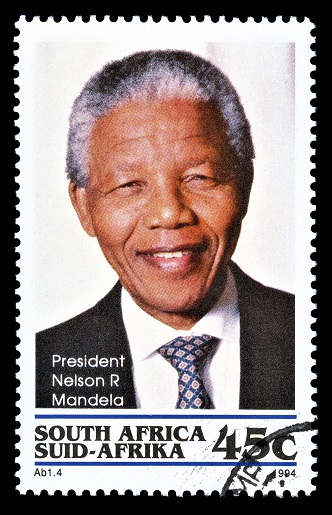
In actual fact, all of us, regardless of our racial group, were freed when Nelson Mandela was released from jail.








 The Magic Roundabout